Rice University: Admissions, Rankings, and Student Life
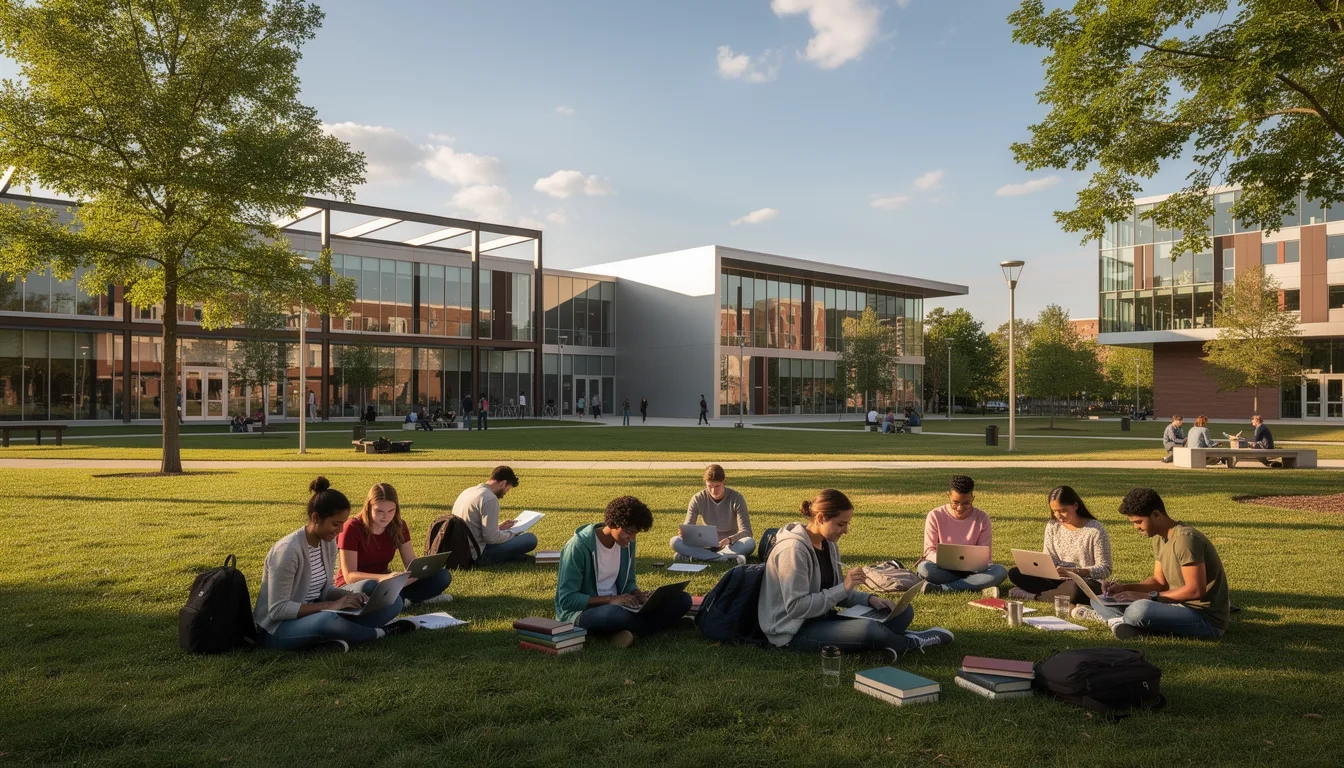
If you asked ten people what Rice University is known for, at least seven would say "engineering" and stop there. That's not wrong, exactly — but it's the same as describing New York City as "a place with tall buildings." Rice is a roughly 4,800-student research university in Houston with a genuinely elite music conservatory, a top-15 architecture program, one of the best undergraduate business schools in the country, and an admissions process that is, at this point, harder to get through than most Ivy League schools. Let's get into what actually makes Rice tick, using real numbers pulled straight from Rice's own admission office, the Rice Thresher (the student paper that reports on this stuff obsessively), and US News.
Admissions: How Selective Is Rice, Really?
Short answer: extremely.
For the Class of 2029 (the students who started in fall 2025), Rice admitted 2,852 students out of 36,777 applicants — an overall acceptance rate of 7.8%. Notably, Rice's own student paper reported that this was actually the highest acceptance rate Rice had posted in three years, which tells you how competitive the cycles before it were.
Breaking it down by application round:
- Early Decision I: 13.2% admit rate
- Early Decision II: 6% admit rate
- Overall Early Decision: roughly 11.84% combined
- Regular Decision: 2,299 admits out of 31,308 applicants, about 7.34%
The pattern here is the one you'll see at almost every highly selective school: applying Early Decision roughly doubles your odds compared to Regular Decision, because you're competing against a smaller, though still strong, pool and signaling that Rice is genuinely your first choice. ED at Rice is binding, so only go that route if you mean it.
On test scores: Rice is test-optional, and the middle 50% of SAT submitters landed between 1510 and 1560, with ACT submitters scoring 34-36 in the middle 50%. Rice no longer publishes an average GPA (a lot of schools have moved away from that as grading scales vary so much between high schools), but among admitted students who reported class rank, 90% were in the top 10% of their graduating class and 97% were in the top quarter. In plain terms: this is a valedictorian-and-salutatorian-heavy applicant pool, and test scores alone won't carry an application — Rice reads holistically, and its famous supplemental essays (including ones asking why you'd want to belong to a specific residential college) genuinely factor into decisions.
Deadlines for the current cycle:
| Plan | Deadline | Decision Released |
|---|---|---|
| Early Decision I | November 1 | Mid-December |
| Early Decision II | January 4 | Late January |
| Regular Decision | January 4 | Late March |
One more thing worth knowing if cost is a factor in where you apply: Rice's financial aid program, called the Rice Investment, is unusually generous. As of the 2025-26 year, families earning under $75,000 pay no tuition, fees, room, or board; families between $75,000 and $140,000 pay no tuition; and families between $140,000 and $200,000 get at least half of tuition covered. Rice has also announced an expansion starting with the fall 2027 entering class that raises the free-tuition income threshold to $200,000, with families under $100,000 getting tuition, fees, and room and board fully covered. In fall 2025, 54% of undergraduates received financial aid, with the average first-year aid package landing around $71,698 — against a total cost of attendance that's around $85,000 a year, that's a serious dent.
The Residential College System: Rice's Defining Feature
If there's one thing that separates the actual Rice experience from a spreadsheet of rankings, it's the residential college system, and it's worth understanding before you apply because it shapes literally everything about undergraduate life there.
Here's how it works: every incoming student is randomly sorted into one of Rice's 11 residential colleges (a 12th, Chao College, is being added as the university grows its undergraduate population). You don't choose your college, you don't get sorted by major or test scores, and — this is the key part — you stay affiliated with that college for all four years, even if you eventually move off campus. Each college has its own dining hall, its own government, its own traditions, its own rivalries, and a live-in faculty "magister" and resident associates who function something like an on-campus family.
Instead of fraternities, sororities, or special housing for honors students and athletes, every student is randomly assigned to one of the residential colleges, where they remain for their entire undergraduate experience.
Because of this system, Rice has no traditional Greek life in the fraternity/sorority sense — the social and community-building role that Greek organizations play at other schools is largely absorbed by the residential colleges instead. It's a big reason Rice consistently shows up near the top of "happiest students" and "best quality of life" surveys: the social structure isn't optional or exclusive, it's baked in from day one.
The system produces two of Rice's signature traditions:
- O-Week (Orientation Week): New students are welcomed into their college with a genuinely over-the-top level of enthusiasm — themed events, matching gear, and a level of school spirit that catches a lot of incoming students off guard in a good way.
- Beer Bike: Dating back to 1957, this is Rice's biggest annual event — a relay race combining bike laps with a chugging leg (beer for participants 21+, water for everyone else), with every residential college fielding teams. The week leading up to it, called Willy Week, includes water balloon fights, color wars, and campus-wide chaos in the best sense.
Student Life Beyond the Colleges
With around 4,800 undergraduates (Rice is in the middle of a planned expansion to roughly 5,200 by 2028, a 30% increase from 2020 levels) and a student-faculty ratio of 6:1 that the university has explicitly committed to maintaining through that growth, Rice sits in a sweet spot: small enough that professors know your name, large enough to support genuinely research-grade facilities and a Division I athletics program.
Class sizes stay small by design — that 6:1 ratio is one of the lowest of any major research university in the country, closer to what you'd expect at a small liberal arts college than a school with Rice's research output. Rice students also tend to describe the workload as intense but not competitive in a cutthroat way; the honor code (a fully student-run system with take-home, unproctored exams in many courses) reinforces a culture of trust rather than rivalry, which students frequently cite as one of the more distinctive parts of daily academic life.
Notable Programs (It's Not Just Engineering)
This is where the "just an engineering school" misconception really falls apart.
Common misconception: People assume Rice is basically MIT-with-a-Texas-accent — a STEM-only school where humanities and arts are an afterthought. It's an understandable assumption given Rice's reputation in engineering and its history producing NASA-adjacent research, but it doesn't hold up.
- George R. Brown School of Engineering and Computing — genuinely strong, ranked around #21 nationally for undergraduate engineering by US News, with particular strength in bioengineering given Rice's location next to the Texas Medical Center.
- Shepherd School of Music — one of the most selective conservatory-style music programs in the country, housed partly in a building designed by architect Ricardo Bofill, with a newer performance complex (Brockman Hall) that opened in 2022. Admission requires a live or recorded audition on top of academic admission — it's a genuinely different, and tougher, bar than the general applicant pool.
- Jones Graduate School of Business — offers Rice's undergraduate business minor/major pathway and is consistently well-regarded nationally at the graduate level.
- School of Architecture — small, highly regarded, and known for its "Rice Design Alliance" and study-abroad-style studio culture.
- Wiess School of Natural Sciences and School of Humanities/Social Sciences — Rice's humanities and social science departments are strong enough that political science, economics, and English majors routinely go on to top law schools, PhD programs, and policy careers, aided by campus resources like the Baker Institute for Public Policy (led by former Secretary of State James Baker) and the Kinder Institute for Urban Research.
The honest takeaway: Rice is a STEM-heavy school by enrollment numbers, but it is not a STEM-only school by institutional identity. If you want a serious music conservatory experience without giving up a full liberal-arts-adjacent college experience, or a top architecture program without moving to a design-only school, Rice is one of a small handful of places that offers that combination.
Location: Houston Is a Feature, Not a Backdrop
Rice's 300-acre campus sits inside Houston's Museum District, directly across Main Street from the Texas Medical Center — the largest medical complex in the world, with 21 hospitals and dozens of research institutions. That proximity isn't just scenery; it translates into real internship, research, and shadowing opportunities for pre-med and bioengineering students that are hard to replicate at a rural or suburban campus. Hermann Park, the Houston Zoo, and Rice Village (a walkable retail and restaurant district) all sit within a short walk or bike ride of campus, and downtown Houston's energy sector, one of the largest job markets in the country for engineers and business majors, is a quick drive away.
Houston itself is the fourth-largest city in the US, which means Rice students get a genuine big-city experience — diverse food scenes, a real arts and museum district, professional sports teams — without the eye-watering cost of living you'd find in Boston, New York, or the Bay Area.
Rice by the Numbers vs. Peer Schools
Rice frequently gets mentioned in the same breath as Vanderbilt, Emory, and Washington University in St. Louis — mid-size, private, research-heavy universities with strong pre-professional pipelines. Here's how they stack up on the numbers that tend to matter most to applicants:
| School | US News 2026 Rank | Acceptance Rate | Student-Faculty Ratio | Undergrad Enrollment |
|---|---|---|---|---|
| Rice University | #17 | 7.8% (Class of 2029) | 6:1 | ~4,800 |
| Vanderbilt University | #17 | 4.7% (Class of 2029) | 8:1 | ~7,200 |
| Washington University in St. Louis | #20 | 11.9% | 7:1 | ~8,200 |
| Emory University | #24 | 10.65% | 8:1 | ~7,400 |
A few things jump out. Rice ties Vanderbilt for the highest national ranking in this group, while being noticeably smaller and maintaining a tighter student-faculty ratio than any of the three. Vanderbilt is currently the hardest of the four to get into on pure numbers, but Rice isn't far behind and is the smallest school on the list by a meaningful margin — which matters if you specifically want the tight-knit, everyone-knows-everyone feel that a 4,800-person undergraduate population creates.
The Bottom Line
Rice University is a small, elite research university that has quietly become one of the most selective schools in the country — a 7.8% acceptance rate for its most recent class puts it in the same admissions tier as several Ivy League schools, even though it doesn't always get the same name recognition outside serious college-admissions circles. What makes Rice worth the application, beyond the numbers, is the residential college system: it's a genuinely unusual approach to campus social life that trades the choice-and-exclusivity model of Greek life for a randomly assigned, four-year community that most alumni describe as the best part of their Rice experience. Add in a 6:1 student-faculty ratio, a location wedged between a major medical center and a walkable city neighborhood, unusually generous need-based financial aid, and legitimately strong programs well outside engineering — music, architecture, business, public policy — and you get a school that rewards a closer look than its "STEM school in Texas" reputation suggests.
Frequently Asked Questions
Is Rice University hard to get into? Yes. The Class of 2029 acceptance rate was 7.8%, with Regular Decision at about 7.34% and combined Early Decision closer to 11.84%. That makes Rice comparably selective to several Ivy League schools.
Is Rice test-optional? Yes, Rice is currently test-optional. Among students who did submit scores, the middle 50% SAT range was 1510-1560 and the middle 50% ACT range was 34-36.
What is the residential college system at Rice? Every undergraduate is randomly assigned to one of Rice's 11 residential colleges (soon to be 12 with the addition of Chao College) upon admission and remains affiliated with that college for all four years, regardless of where they live. Each college functions as a self-contained community with its own dining hall, government, and traditions, and largely replaces the social role that fraternities and sororities play at other schools.
Does Rice have Greek life? No traditional fraternities or sororities exist in the way most schools have them. The residential college system serves that social and community-building function instead.
Is Rice only good for engineering and STEM majors? No. While Rice's engineering programs (through the George R. Brown School of Engineering and Computing) are excellent, Rice also has a highly selective music conservatory (Shepherd School of Music), a well-regarded architecture school, a strong business program (Jones Graduate School of Business), and respected humanities and social science departments supported by institutes like the Baker Institute for Public Policy.
How much does Rice cost, and is financial aid good? Total cost of attendance is roughly $85,000 a year, but Rice's need-based aid program, the Rice Investment, covers full tuition for families earning under $140,000 and at least half of tuition for families up to $200,000 (with an expansion planned starting fall 2027 that raises thresholds further). About 54% of undergraduates receive financial aid, with the average first-year award around $71,698.
Sources
- Rice welcomes 7.8% of applicants to class of 2029 - The Rice Thresher
- Rice accepts 13% of record-setting ED applications - The Rice Thresher
- Residential Colleges | Rice University
- Rice rises in US News rankings, recognized for value, teaching and innovation | Rice News
- Rice climbs back up to No. 17 on 2026 US News and World Report Ranking - The Rice Thresher
- Rice University (Rice) - Profile, Rankings and Data | US News Best Colleges
- The Rice Investment | Office of Financial Aid | Rice University
- Rice announces historic enrollment growth, expanding access and free tuition | Rice News
- Rice's Beer Bike brings tradition, competition and community to campus | Rice News
- Houston | Office of Admission | Rice University
- Facts & Rankings | School of Engineering | Rice University
- Vanderbilt rises one spot in 2026 U.S. News Ranking to No. 17 - The Vanderbilt Hustler