Tufts University: Admissions, Rankings, and Student Life Guide
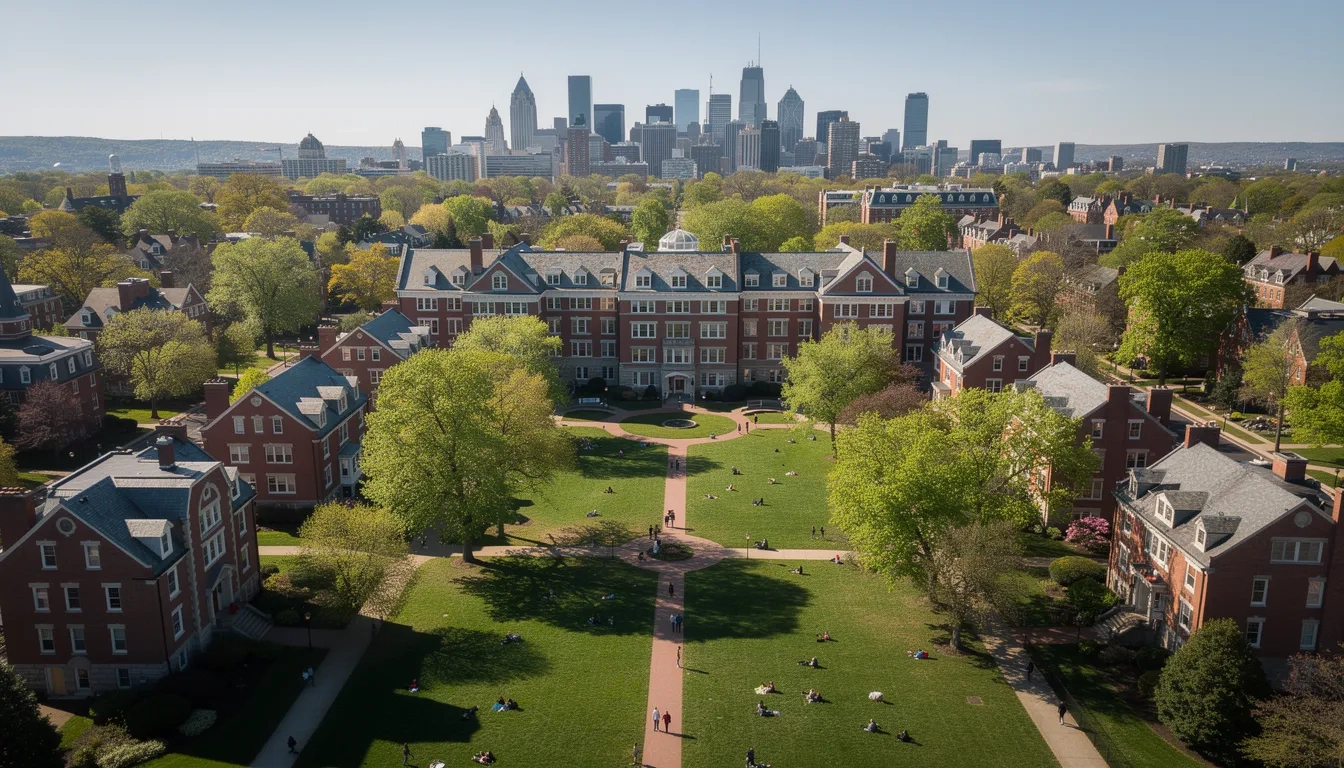
Tufts sits in a tier that college counselors love to debate. It's not an Ivy League school, but "below Ivy" doesn't quite capture it either. With a 10.8% acceptance rate for the Class of 2029, Tufts is now harder to get into than Cornell was fifteen years ago. Yet it rarely gets the same reverence — which, honestly, works in your favor if you're thinking strategically about where to apply.
What Tufts' #37 Ranking Actually Tells You
US News ranked Tufts 37th among national universities in 2025. That number undersells the school's real competitive position, and here's why: ranking methodology rewards factors like peer assessment scores and raw research spending, which structurally favor older flagship universities regardless of undergraduate quality.
Tufts punches well above its ranking in specific areas. The Fletcher School of Law and Diplomacy — housed at Tufts — is consistently ranked among the top five graduate programs for international relations in the country. The Tisch College of Civic Life is the only free-standing college dedicated to civic engagement at any research university in the United States. These aren't marketing lines; they're structural investments with faculty, funding, and degree programs behind them.
| Ranking System | Tufts Position (2025) |
|---|---|
| US News National Universities | #37 |
| Times Higher Education World Rankings | #179 |
| QS World University Rankings | #334 |
The gap between THE (#179) and QS (#334) isn't a data error. QS weights citations per faculty heavily; THE leans on teaching environment and international diversity. Tufts is a research university that genuinely prioritizes undergraduate instruction, so THE's formula tends to favor it. Neither ranking tells the full story.
Tufts graduates appear regularly in State Department, consulting, biotech, and global health roles — fields where the school's specific programs, not its US News position, built the pipelines.
The Admissions Numbers for Class of 2029
Tufts received 33,415 applications for the Class of 2029 and admitted 3,613. The acceptance rate: 10.8%. The enrolled class settled at 1,762 students, split across Arts & Sciences (1,303), Engineering (296), and the School of the Museum of Fine Arts at Tufts (163 combined and standalone BFA students).
Test scores cluster high but aren't mandatory. The SAT middle 50% runs 1,480–1,550, and the ACT middle 50% sits at 33–35. About 65% of admitted students submitted scores voluntarily — Tufts has maintained its test-optional policy since 2020, now in its sixth year with no announced end date.
One stat that most guides skip: the international acceptance rate is just 6.3%, compared to 11.5% overall in the 2024–2025 cycle. International applicants face a meaningfully tighter pool than domestic students.
The waitlist picture is also worth knowing:
- Tufts keeps a smaller waitlist than comparable schools
- In a recent cycle, 354 of 2,080 waitlisted students who accepted a spot were ultimately admitted
- That's roughly a 17% conversion rate — notably higher than peer institutions like Georgetown or Emory
What Tufts Is Actually Looking For
After the Class of 2029 decisions went out in March 2025, Dean JT Duck's office noted that "many admitted students have started businesses" or built genuine responses to community challenges. That's not a throwaway line. It signals what the file readers are screening for: a through-line, not a résumé.
Depth over accumulation is the real standard here. A student who spent three years building a mentorship program in their city is a more compelling applicant than someone who sampled eight clubs across four years. Tufts essays explicitly invite students to connect their work to the school's civic engagement ethos — vague answers that could fit any selective university tend to get filtered out.
What the enrolled class data reveals about competitive applicants:
- 85%+ ranked in the top 10% of their high school class
- 12% are first-generation college students (Tufts actively recruits this group)
- 55% attended public high schools — prep school is not a prerequisite
- Students came from 1,101 different high schools across 44 states
One non-obvious point: Tufts tracks demonstrated interest more deliberately than its "holistic review" messaging implies. Campus visits, virtual information sessions, and specific engagement with named programs or faculty show up in the process. The school is one of the QuestBridge college partners, which also signals real investment in recruiting students from under-resourced backgrounds.
Financial Aid: The Merit Scholarship Reality
Here's the part most applicants don't find out until after they apply. Tufts offers zero merit scholarships for students in Arts & Sciences or Engineering. Every dollar of institutional aid is need-based only. The one exception — a National Merit Scholarship of $500 per semester — is essentially symbolic.
Total cost of attendance for 2025–26 runs to approximately $96,028. For families who won't qualify for significant need-based aid, that's the real number.
The other side of the equation is genuinely strong. Tufts meets 100% of demonstrated financial need for admitted students. Families earning under $60,000 annually typically receive offers with no loans at all — grants and work-study only. The average need-based grant for first-year students was $58,196, bringing the net price down to around $33,908 for qualifying families.
"All aid is based solely on financial need and is not adjusted for superior academic performance or extracurricular activities." — Tufts Admissions Office
This matters strategically for families in the $120,000–$180,000 income range. That bracket is too high for generous need-based aid, too low to absorb sticker price without real strain. If you're in that range, run Tufts' net price calculator before applying and compare against schools like Vanderbilt or the University of Chicago, which offer substantial merit awards to high-achieving students regardless of family income. Going into the application blind on this is a common and expensive mistake.
Student Life: Civic Engagement as Campus Identity
Tufts student culture has a distinct flavor. Students consistently describe it as collaborative and civically oriented — not in the abstract way every admissions brochure claims, but in ways that show up in how students spend their time outside class.
The Leonard Carmichael Society (LCS) is the largest student organization on campus and worth knowing by name. It functions as an umbrella body for service groups running English classes for immigrants, engineering education outreach for local kids, and FOCUS — a community-service pre-orientation program that roughly 200 incoming first-years complete each year before classes even begin.
The broader student organization landscape includes:
- 350+ registered organizations spanning arts, culture, advocacy, pre-professional, and athletic categories
- 40+ cultural clubs, from the Central Asian Student Union to the Tufts Hawai'i Club to the Armenian Student Association
- The Tufts University Social Collective (TUSC), which runs 200+ events annually including Fall Fest, Spring Fling, weekly film screenings, and Tuftonia's Day
- Fraternity and sorority life dating back to 1855, including both traditional and culturally specific chapters
- 28 Division III varsity sports, plus club teams ranging from fencing and Ultimate Frisbee to the Tufflepuffs quadball team (Quidditch rebranded under World Aquatics rules)
The Tufts Daily has published continuously since 1895, making it one of the oldest college dailies in the country. Students serious about journalism, policy writing, or media production have a real institution to work within, not just a student hobby project.
Location: What Medford and Boston Actually Give You
Tufts sits on a hill straddling Medford and Somerville, about 5 miles from downtown Boston. That geography creates a specific dynamic worth understanding. Students are close enough to use the city actively without being absorbed into it the way Boston University or Northeastern students often are.
The Red Line subway connects Davis Square (a 15-minute walk from campus) to Harvard Square in roughly 12 minutes and downtown Boston in about 25. For pre-med students pursuing clinical hours at Mass General Brigham or Tufts Medical Center, or for computer science students targeting Route 128's tech corridor, the access is real and regularly used — not theoretical.
Somerville has changed dramatically over the past decade. Davis Square's restaurant scene, Assembly Row's development along the Mystic River, and the neighborhood's density of music venues and independent shops give off-campus weekends genuine texture. It's not Manhattan, but it's a far cry from a campus marooned in farmland.
Tufts' other schools — the Cummings School of Veterinary Medicine in Grafton, and the medical and dental schools in Boston's Chinatown neighborhood — sit on separate campuses. That matters if you're considering combined-degree pathways or want undergraduate research experience in clinical settings. Many undergrads shadow physicians or work in dental clinics through connections the proximity makes possible.
Should You Apply?
My honest read: Tufts is undervalued relative to its actual outcomes, particularly for students targeting health, policy, international relations, and engineering. The Tisch College infrastructure for civic engagement work doesn't exist in the same form anywhere else in its tier.
The no-merit-aid policy is a genuine constraint for a specific group of applicants, and pretending otherwise doesn't help anyone. But for students who qualify for need-based support — or for whom cost isn't the deciding factor — Tufts' combination of academic depth, Boston access, and a campus culture that actually acts on its stated values is hard to replicate among schools ranked nearby.
The applicants who get in and thrive there tend to have a clear answer to one question: why civic engagement, and why now?
Bottom Line
- Run the net price calculator before you fall in love with Tufts. No merit aid means families in the $100K–$200K range may get a smaller package than at schools that offer academic scholarships.
- Apply Early Decision if Tufts is genuinely your first choice. ED rates are higher (Tufts doesn't publish the exact differential, but it's real), and the binding commitment signals demonstrated interest in a school that pays attention to it.
- Write Tufts-specific essays. Name the Tisch College, a specific research center, or a professor whose work connects to yours. Generic "I want a rigorous and collaborative environment" essays are the fastest way to a thin file.
- Don't let the #37 ranking anchor your perception. In health, policy, and international careers, Tufts punches well above that number.
Frequently Asked Questions
Does applying Early Decision to Tufts actually improve your chances?
Yes. Tufts doesn't release its ED acceptance rate publicly, but binding early decision historically correlates with higher admission odds at comparable schools, typically running 5–15 percentage points above regular decision rates. The binding commitment also functions as a demonstrated interest signal, which Tufts weighs in its holistic process. If Tufts is genuinely your first choice, ED is worth considering seriously — provided you've already run the financial aid numbers and can commit before seeing competing offers.
Is Tufts actually test-optional, or do scores still help?
It's genuinely optional — the policy has been in place since 2020 and the school has given no indication of reversing it. That said, 65% of admitted Class of 2029 students submitted scores voluntarily. The practical rule: if your SAT is above 1,480 or your ACT is 33 or higher, submitting strengthens your application. If your scores fall below those ranges, hold them and let your grades, essays, and activities carry the file. Submitting below-range scores actively hurts your chances.
Is Tufts a strong school for pre-med students?
Yes, and specifically because of what surrounds it. Biology, community health, and pre-health pathways are among the most popular intended majors in every recent admitted class. Tufts Medical Center, Mass General Brigham, and Boston Children's Hospital are all accessible via the T. The Tufts School of Medicine on a separate Boston campus also offers a combined 7-year BS/MD program that admits a small cohort of undergraduates annually — a rare and competitive pathway for students with clinical clarity early on.
What's the biggest misconception about getting into Tufts?
That a perfect résumé is enough. Students who list 10 clubs and strong grades but can't articulate a genuine commitment to civic engagement, applied learning, or a specific intellectual through-line often struggle in Tufts' process. The admissions office has been explicit that depth and originality matter more than volume. A student with two meaningful long-term commitments and a clear narrative around them will typically out-compete a student with eight brief involvements and no connective tissue.
How is Tufts different from similar-ranked schools like Brandeis or Case Western?
The clearest structural difference is the Tisch College of Civic Life — a free-standing college with its own faculty, funding, and curriculum, not a program or a center. It gives Tufts a civic engagement infrastructure that schools ranked nearby don't have in the same form. The Boston location also separates it: Brandeis is in suburban Waltham with limited transit access; Case Western is in Cleveland. Tufts offers urban proximity and a distinct institutional identity that shows up in student culture, not just marketing copy.
What happens if you get waitlisted at Tufts?
Send a strong letter of continued interest within a week of accepting your waitlist spot. Make it specific: what's happened since you submitted (a new award, a completed project, an acceptance into a relevant program), and reaffirm that you'd enroll if admitted. Tufts' waitlist conversion rate is higher than comparable schools — roughly 17% of one recent incoming class came off the waitlist (354 students from 2,080 accepted spots). That's a real number, not a consolation prize, but it requires active follow-through on your end.