UNC Chapel Hill: Admissions, Rankings, and Student Life
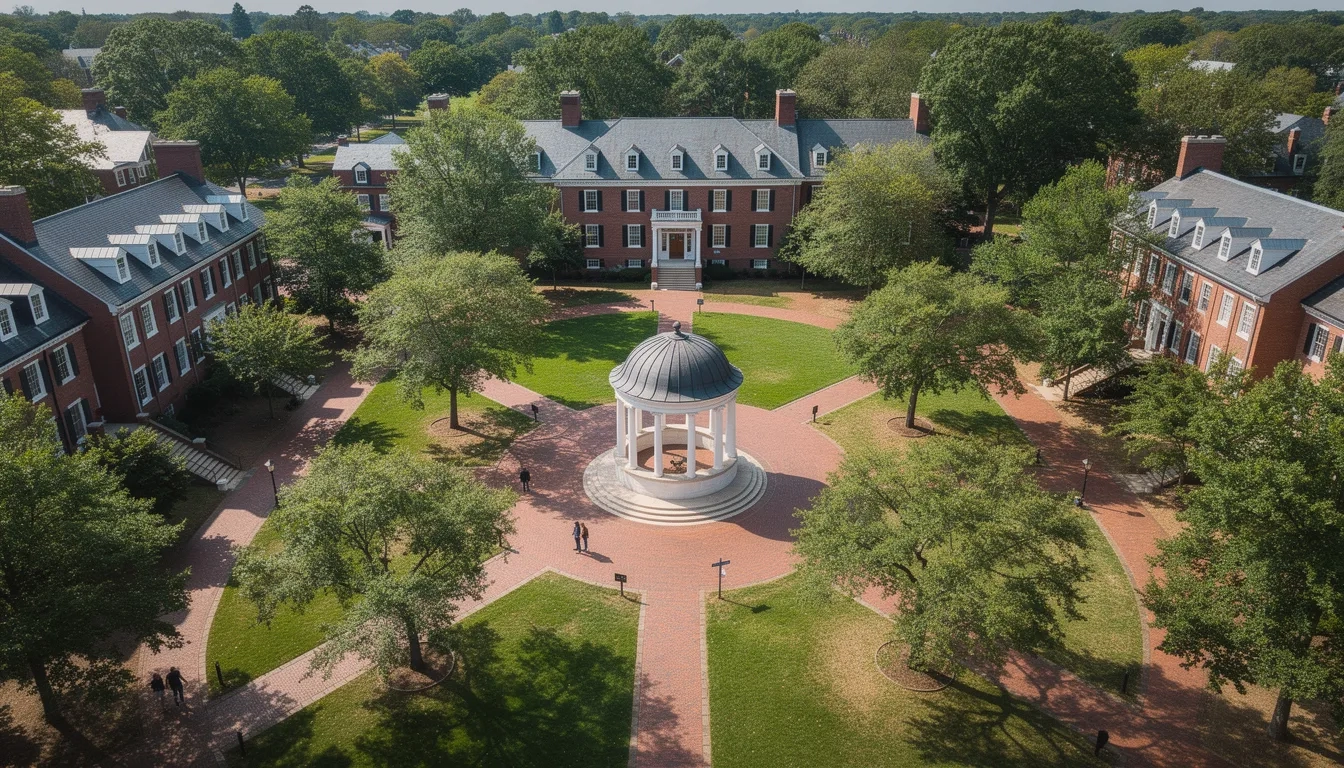
UNC Chapel Hill has held the #1 best value public university ranking in America for 21 consecutive years. Yet the most recent admissions cycle saw its out-of-state acceptance rate drop to 6.6%, making Carolina harder to crack for non-residents than many schools ranked above it nationally. If you're from outside North Carolina treating UNC as a safety school, the writing is on the wall.
Where Carolina Actually Ranks
US News placed UNC at #26 among all national universities and #4 among public schools in the 2026 Best Colleges rankings. Those numbers put it in direct conversation with Virginia, Michigan, and UCLA for the same type of academically ambitious student.
The "best value" designation carries more weight than any single ranking number. US News calculates it by cross-referencing academic quality against net price paid by actual students. For North Carolina residents, in-state tuition sits around $9,000 per year. Stack that against a top-26 national ranking and the math explains why that #1 value position has held for over two decades.
Graduate programs tell an even stronger story:
| Ranking Category | UNC Position (2026) |
|---|---|
| National Universities | #26 |
| Top Public Schools | #4 |
| Best Value Public University | #1 (21st straight year) |
| Public Health — Gillings School | #2 overall, #1 public |
| Undergraduate Business — Kenan-Flagler | #8 nationally |
Gillings School of Global Public Health is the crown jewel. It has ranked #1 among public schools of public health for eight consecutive years, with specific programs in environmental health (#1) and health policy (#2) at the top of their fields nationally. Twenty UNC graduate programs sit in the top 10.
Admissions: What the 15.3% Number Actually Tells You
UNC admitted 10,209 students from 66,535 applications in the most recent cycle. That headline rate of 15.3% obscures almost everything useful because one variable drives most of the outcome: where you live.
Application volume has jumped sharply:
| Cycle | Applicants | Admitted | Rate |
|---|---|---|---|
| 2025 | 66,535 | 10,209 | 15.3% |
| 2024 | 57,221 | 9,640 | 16.8% |
| 2023 | 53,776 | 10,347 | 19.2% |
| 2022 | 44,382 | 10,446 | 23.5% |
The pool grew by roughly 50% in four years. Admitted numbers barely budged.
The academic profile of enrolled students is extremely compressed. Average weighted GPA: 4.49. SAT middle 50%: 1400–1530. ACT: 28–34. About 77% of enrolled first-years ranked in the top 10% of their high school class.
Here's the number worth sitting with: 97% of enrolled students reported an unweighted GPA of 4.0. The pool concentrates almost entirely at the ceiling of what high school students can achieve.
UNC is test-optional for applicants with a weighted GPA of 2.8 or higher. Students with a GPA below 2.8 must submit a qualifying score (SAT minimum 930, ACT minimum 17). If your scores fall solidly in the middle 50% range or above, submit them.
In-State vs. Out-of-State: The Biggest Gap at Any Flagship
This is where UNC gets structurally complicated for a lot of families.
North Carolina state law requires that at least 82% of each incoming class be state residents. The result is a two-tier system with dramatically different odds:
- In-state applicants: ~38% acceptance rate
- Out-of-state applicants: 6.6% acceptance rate
- International applicants: 14.3% (actually higher than domestic out-of-state)
A North Carolina student with a 3.8 GPA and genuine extracurricular depth has a real shot. A student from Ohio with identical credentials is competing in a pool roughly six times harder to crack.
This isn't an institutional preference. It's state law. Virginia and Michigan have similar dynamics, but UNC's gap is among the steepest at any major public university in the country.
A few things follow from this:
Yield data shows how students actually respond. 61.4% of admitted in-state students enrolled. Only 18.2% of admitted out-of-state students did. Most OOS admits who get in are heading to private schools when they have options—UNC functions as a backup for them, not a destination.
Early Action (October 15 deadline) is worth the effort. UNC sent 5,903 in-state EA offers from 14,931 early applications in the fall 2026 cycle, a 39.5% EA rate for NC residents. For OOS applicants, EA won't close the structural gap, but it puts you in a smaller pool and signals genuine interest.
Don't build your plan around the waitlist. Of 6,120 students placed on the waitlist, only 295 were ultimately admitted. That's a 4.8% conversion from the waitlisted pool. Statistically negligible for planning purposes.
What UNC Actually Wants from Applicants
UNC uses holistic review, and it genuinely means it here. Essays and extracurriculars are rated "very important"—the same weight as GPA and course rigor in their own stated framework.
Course rigor is the floor, not the differentiator. With a 4.49 average weighted GPA, AP and IB coursework is baseline for competitive applicants. What matters is whether you took the hardest courses available at your specific school. Admissions readers evaluate rigor in context—a student from a small rural high school with fewer offerings gets evaluated differently than a student from a large suburban school with 30 AP sections.
Essays carry unusual weight for a school processing 66,000+ applications. Part of UNC's legislative mission is serving North Carolina's communities. Essays that show you understand that mission—or that articulate a specific reason you want this academic environment—read differently than essays recycled from five other applications.
Deep commitment beats breadth every time. Here's a practical approach:
- Lock in 2–3 meaningful extracurricular commitments by the start of junior year
- Take the hardest courses your school offers, even if it trims a decimal point from your GPA
- Apply Early Action if UNC is a genuine top choice
- Write essays that show you've researched UNC specifically, not just "a good school in the South"
Student Life: What Chapel Hill Actually Feels Like
Chapel Hill is a college town the way college towns are supposed to be. Franklin Street runs along the north edge of campus, lined with coffee shops, restaurants, and bars all within a 15-minute walk from any dorm. No urban grit, no suburban sprawl. Walkable, brick-and-magnolia campus in a contained setting that produces a cohesive undergraduate culture.
First-year housing splits between two distinct experiences. North Campus is quieter, more traditional, architecturally older and closer to main academic buildings. South Campus is livelier, high-rise, noticeably louder on weekends. Where you land shapes your first-year friend group more than most incoming students expect. About 43% of all undergraduates live in university housing; first-years are required to.
The social calendar rotates around basketball. The Carolina-Duke rivalry (the two campuses are less than 10 miles apart) functions as a cultural organizing event for the entire university. Students camp outside for tickets. After a win over Duke, thousands flood Franklin Street in a tradition stretching back decades—the Daily Tar Heel, which has been publishing continuously since 1893, has covered every one of those celebrations.
Greek life participates without controlling the scene. About 18% of students join fraternities or sororities. Niche surveys consistently show that 59% of students rate Greek life's social impact as "average," meaning the other 82% of students has full access to a rich social life.
UNC hosts 800+ student organizations. Some standouts: Carolina for the Kids (the largest student-run philanthropic organization in the U.S., raising $2.4 million in 2023 for children with serious illness), Model UN, roughly a dozen a cappella groups, and the Robertson Scholars program (a full-ride scholarship that lets students study at both UNC and Duke simultaneously).
Inside the Classroom
UNC enrolls roughly 21,000 undergraduates. That scale means introductory science and economics courses routinely seat 200+ students in a lecture hall. The pre-med science sequence has a real reputation for difficulty. Students who cruised through AP Biology and AP Chemistry in high school often find BIOL 101 and CHEM 101 genuinely demanding. Recent curricular reforms have softened some of the sharper edges, but the workload remains substantial.
Upper-level courses are a different story. Hussman School of Journalism and Media faculty maintain active professional connections. Kenan-Flagler professors blend academic research with business practice. Students who make it through the foundational curriculum and find their major consistently report better class sizes and more accessible faculty.
Research access is a genuine differentiator. As an R1 research university with substantial NIH funding, UNC places undergraduates in funded labs at a scale most smaller universities can't match. Students who seek out these positions proactively—usually starting by junior year—leave with credentials that meaningfully strengthen medical school and graduate applications.
Bottom Line
UNC Chapel Hill is one of the best academic bargains in the country for North Carolina residents. For everyone else, it's a genuinely selective school that demands a serious application strategy.
- In-state applicants: Apply Early Action, treat the essays as carefully as you would for any top-25 private, and take the hardest courseload available. The 38% in-state rate is real and accessible with the right profile.
- Out-of-state applicants: Understand that 6.6% is a structural reality, not a soft target. Apply only if UNC is truly your top choice or sits alongside comparable schools. The waitlist is not a backup plan.
- On campus: Expect big-school scale with a tight college-town feel, basketball as the social heartbeat, and research infrastructure that genuinely rewards students who go looking for it. The value ranking hasn't slipped in 21 years for no reason.
Frequently Asked Questions
Is UNC Chapel Hill test-optional for the 2026–27 cycle?
Yes. Applicants with a weighted GPA of 2.8 or higher may choose not to submit SAT or ACT scores. Students with a GPA below 2.8 must submit a qualifying score (SAT 930 minimum, ACT 17 minimum). If your scores fall within or above the middle 50% range of 1400–1530 SAT and 28–34 ACT, submitting them almost certainly helps.
How hard is it to get in as an out-of-state student?
Significantly harder than the 15.3% overall rate suggests. Out-of-state applicants faced a 6.6% acceptance rate in the most recent cycle, reflecting a state law requiring that at least 82% of each enrolled class be North Carolina residents. There's no workaround—it's a structural feature built into how UNC operates by legal mandate.
What is UNC's strongest undergraduate program?
That depends on your field, but Kenan-Flagler Business School (#8 undergraduate business nationally) and the pre-health and public health tracks feeding into Gillings (#2 public health school overall) are the most decorated. Journalism through Hussman and political science have strong reputations for students aiming at media or policy careers.
Does UNC have good campus life if you skip Greek life?
Yes. About 82% of students are not in Greek life, and the social infrastructure doesn't depend on it. Carolina for the Kids, intramural sports, 800+ clubs, and the collective ritual of basketball season create enough social gravity that students consistently report feeling connected without Greek participation. Franklin Street alone generates a social scene.
Does applying Early Action meaningfully improve your chances at UNC?
The data suggests yes, at least for in-state applicants. In the fall 2026 cycle, about 5,903 in-state students were admitted through Early Action from 14,931 EA applications, roughly a 39.5% rate. UNC doesn't release separate EA vs. RD rates officially, but the EA pool is smaller and demonstrating early commitment to UNC reads well in holistic review.
Is the UNC "best value" ranking just marketing?
No, and this is worth being direct about: the numbers actually back it up. A North Carolina resident pays roughly $9,000 per year in tuition at a school ranked #26 nationally, with access to top-10 graduate programs in public health, business, and journalism. The comparable out-of-pocket cost at a private school with similar academic standing would run $55,000–$65,000 per year. That gap is real.
Sources
- UNC Admissions Statistics 2025 — The Koppelman Group
- University of North Carolina Acceptance Rate — Leland
- UNC Chapel Hill ranked No. 1 best public value — UNC News
- UNC Gillings ranked No. 1 public school of public health
- Life at UNC Chapel Hill 2025 — Good Goblin
- University of North Carolina at Chapel Hill — US News Best Colleges
- UNC students rush Franklin Street after sweeping Duke — Daily Tar Heel