Yale University: Admissions, Rankings, and Student Life Explained
Yale received 54,919 applications for the Class of 2030. It admitted 2,328. That 4.2% overall acceptance rate makes Yale one of the five most selective universities in the country — but it also hides the parts of this school that matter most to the people actually living there.
The acceptance rate tells you how hard it is to get in. It tells you almost nothing about what happens after.
The Numbers Behind Yale's Selectivity
Yale's Class of 2030 acceptance rate came in at 4.2% overall, with the regular decision pool cutting even tighter: 3.15%, according to the Yale Daily News — the most selective regular cycle in recent memory. The applicant pool of 54,919 was Yale's second largest ever.
Early action is a different game entirely. Yale's Single Choice Early Action (SCEA) admitted 779 students from 7,140 applicants, a 10.91% rate. That's more than three times the regular decision odds. Students for whom Yale is a genuine first choice and who have a polished application by November 1 should take that math seriously.
Historical context shows which direction things are moving:
- Class of 2028: 3.87% acceptance rate
- Class of 2027: 4.35%
- Class of 2026: 4.46%
The trend line goes one way. Apply when you're ready, not when you think the rate might stabilize.
What Your Application Actually Needs
Here's the misconception that sinks otherwise strong applicants: Yale doesn't want the most perfect-looking student. Yale wants students who want Yale specifically. The admissions office reads for intellectual curiosity and genuine cultural fit — with the residential college system, the a cappella traditions, the intramural competitions — not just academic performance stacked to the ceiling.
What admitted students typically show:
- Unweighted GPA of 3.9 or above (most are closer to 4.0)
- SAT scores roughly between 1500–1580 (middle 50%) or ACT between 34–36
- Deep, sustained commitment to one or two activities rather than a curated list of twenty
Yale's essays explicitly ask why Yale specifically. Students who can name a course taught by a particular faculty member, describe how the Davenport dining hall culture appeals to them, or explain why the Yale Political Union aligns with their interests perform meaningfully better in the process. Generic Ivy League applications don't hold up here.
One thing that surprises people: Yale's Class of 2028 included 25% first-generation college students and Pell Grant recipients. That figure has grown steadily since Yale's 2007 financial aid expansion. The school recruits from underserved communities, and that changes the competitive landscape for applicants from well-resourced high schools in ways admissions consultants don't always flag.
Rankings: Where Yale Stands and Why
US News & World Report places Yale at #4 among National Universities in its 2026 rankings, trailing Princeton, MIT, and Harvard. But the more interesting ranking is #3 in Best Value Schools — which weighs educational quality against net cost after aid. For a university with a $90,550 annual term bill, that label demands explanation (and gets one in the financial aid section below).
Here's a snapshot of the key metrics:
| Metric | Yale 2025–26 |
|---|---|
| US News National Ranking | #4 |
| Best Value Schools Ranking | #3 |
| Undergraduate Enrollment | 6,814 |
| Student-Faculty Ratio | 5:1 |
| Total Cost of Attendance | ~$94,425 |
| Average Need-Based Grant | ~$68,000 |
Yale's 5:1 student-faculty ratio is among the lowest at any large research university in the country. The average seminar enrolls well under 20 students. That's not a marketing claim — it's a structural consequence of Yale's commitment to keeping undergraduate enrollment below 7,000 while maintaining a full research faculty.
QS World University Rankings consistently places Yale in the global top 20. The Center for World University Rankings (CWUR) puts it in the global top 10 for research output and alumni employment. Yale Law, Yale Medicine, and the Yale School of Management each rank among the top programs in their fields independently of Yale's overall institutional rank.
The Residential College System: Yale's Actual Differentiator
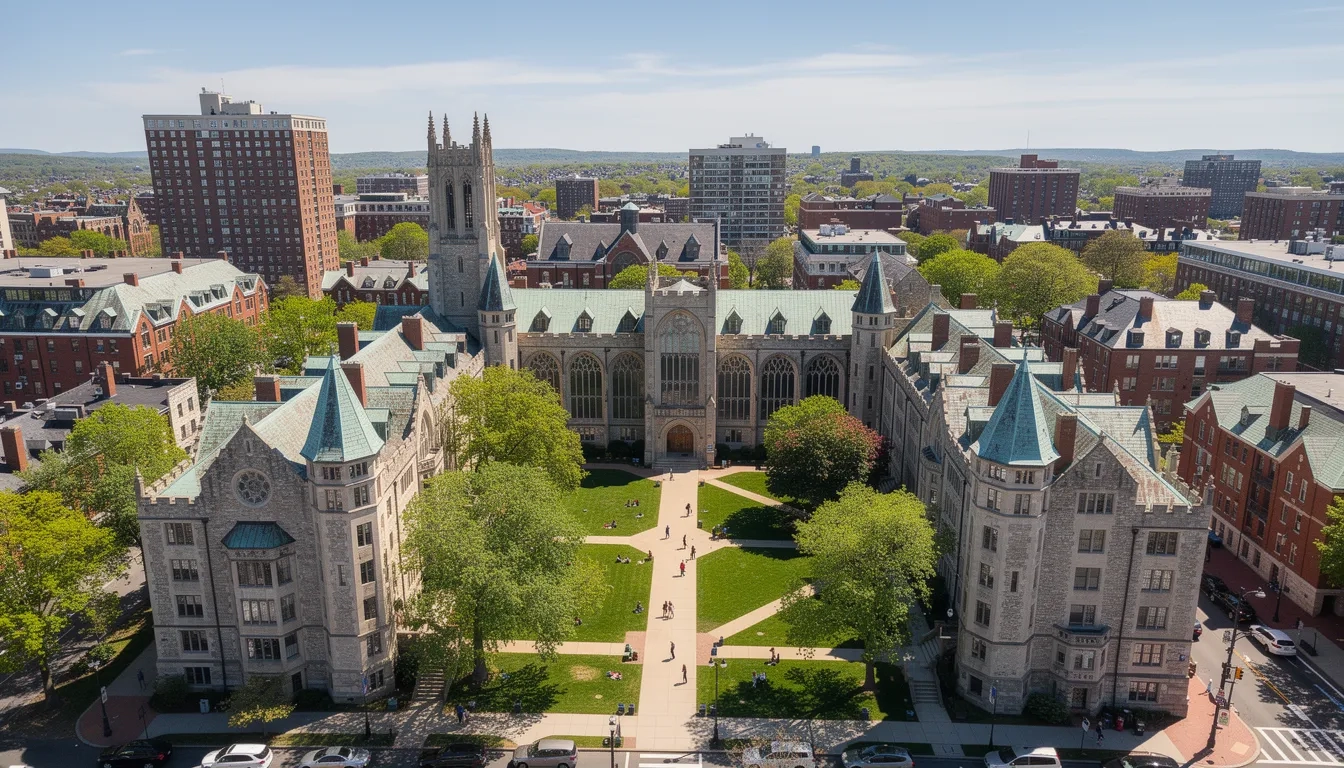
If you've never heard of Yale's 14 residential colleges, this is the part that makes Yale structurally unlike any other Ivy League school.
The colleges — Branford, Davenport, Ezra Stiles, Grace Hopper, Jonathan Edwards, Morse, Pauli Murray, Pierson, Saybrook, Silliman, Timothy Dwight, Trumbull, Benjamin Franklin, and Berkeley — are not dorms with a fancy name. Each is a self-contained community with its own dining hall, library, computer lab, buttery (a student-run late-night snack bar), fitness center, and music practice rooms. Morse College has a Fabric Arts Studio. Berkeley has a woodshop.
"The residential college is Yale in microcosm — a place where students of different majors, backgrounds, and interests share space and build the kind of relationships that define the rest of their lives."
Students are randomly assigned to a college as freshmen. Most first-years live on Old Campus in college-designated dorms, then move into the college itself starting sophomore year. Four colleges — Silliman, Timothy Dwight, Benjamin Franklin, and Pauli Murray — house students from day one.
Each college has a Head of College, a faculty member or senior administrator who lives on-site and shapes the college's character through College Teas with notable guests, special meals, and study breaks. The residential college dean handles academic advising.
And then there's the Tyng Cup — the annual intramural championship where colleges compete across soccer, basketball, water polo, and a rotating roster of other sports all year long. It sounds trivial until you watch a group of seniors lose their minds over the final standings. Institutional pride runs deep.
Student Life: What 500 Clubs Actually Means
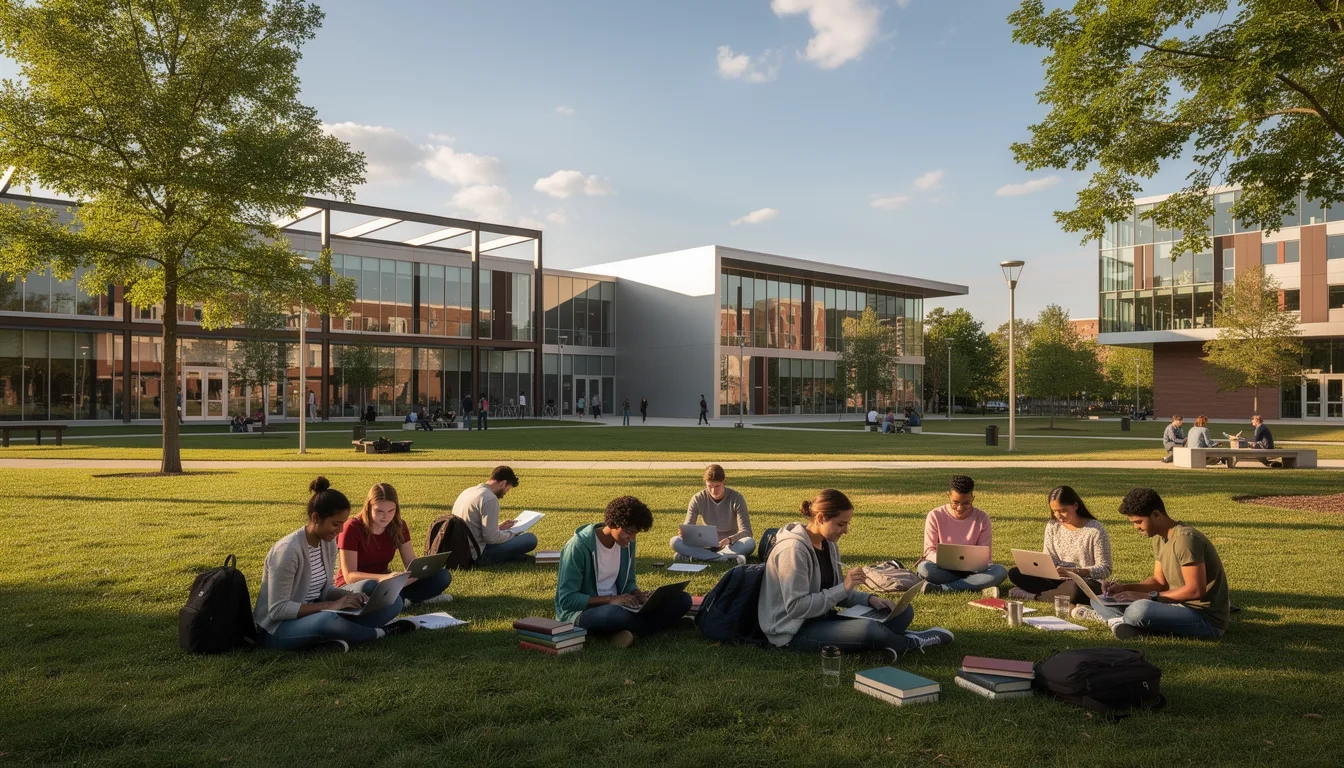
Yale supports over 500 registered student organizations. Nearly 100 athletic teams. 90+ performance groups. 60 cultural associations. Every school says it has "countless opportunities" — at Yale, the density means you can find a niche without being the person who has to found it.
A few things that genuinely stand out:
- A cappella culture is a serious institution here. The Whiffenpoofs, founded in 1909, is the oldest collegiate a cappella group in the United States. Each fall, groups perform at Woolsey Jam, auditions follow, and then comes Tap Night — when new members are tapped on the shoulder to join. Students plan their social calendars around this.
- Spring Fling turns Old Campus into a full-day outdoor music festival with national headliners and student openers. It's the largest student-run event on campus.
- Yale Daily News, founded in 1878, is the oldest college daily newspaper in the country.
- The Yale Political Union draws speakers from across the ideological spectrum and runs one of the most active political debate programs in American higher education.
New Haven itself contributes more than people expect. Students get free admission to the Yale University Art Gallery (which holds over 250,000 objects), access to Broadway-caliber productions at the Yale Repertory Theatre, and Amtrak service to New York City in about 1 hour and 37 minutes. The city's food scene — especially the pizza, which New Haven takes with unusual seriousness — is a genuine perk.
The Real Cost (and Why the Sticker Price Misleads You)
Yale's 2025-26 term bill: $90,550. That breaks down to $69,900 in tuition and $20,650 for housing and meals, with total cost of attendance around $94,425 when you add books and personal expenses.
Those numbers are the ones that make families stop reading. They shouldn't.
55% of Yale undergraduates receive need-based financial aid. The average grant is nearly $68,000 — which, strikingly, exceeds the current tuition charge. Families earning under $75,000 per year (with typical assets) contribute nothing. Families earning under $150,000 typically pay no tuition. Families above $200,000 often still receive significant grants.
The specifics are striking:
- 21% of Yale's current first-year class received zero parent contribution offers
- 25% qualify for federal Pell Grants
- Over 33% are first-generation or lower-income students
- More than 85% of recent graduates leave with no student loan debt
Yale's 2023-24 undergraduate aid budget hit $257 million — more than triple the 2007-08 figure, when Yale began its major policy overhaul. The endowment (approximately $40.7 billion as of 2024) funds this directly. Yale has explicitly committed that if a family's financial circumstances stay the same, their net cost will stay the same — a guarantee that's unusual in higher education.
Here's my honest read: for families earning under $150,000, Yale can realistically cost less than flagship state universities when you model the full aid package. The "expensive Ivy" framing is accurate for families who pay full price. For the majority of students, the sticker price is genuinely the worst number you could use to evaluate affordability.
Bottom Line
- Apply Single Choice Early Action if Yale is your first choice. The 10.91% SCEA rate versus 3.15% regular decision rate is the highest-leverage decision in the entire process. Don't leave that on the table.
- Use the net price calculator before ruling Yale out financially. Families under $150,000 in annual income typically pay no tuition. The $94,425 sticker price applies to fewer than half the student body.
- Write about the residential college system specifically in your application. Yale's essays test whether you've thought about this school's distinct culture — not Ivy League schools generally. Name a college, a tradition, a specific course. Be particular.
- The 5:1 faculty ratio and the residential college infrastructure make Yale's undergraduate experience qualitatively different from peer schools that match or beat it on rankings. The campus culture alone is worth serious consideration.
Frequently Asked Questions
Is Yale harder to get into than Harvard?
Harvard's acceptance rate for the Class of 2028 was 3.6%, lower than Yale's 4.2% for the Class of 2030. By raw numbers, Harvard is marginally more selective. But both schools use holistic review, and a difference of less than a percentage point doesn't meaningfully change how you should approach either application. Apply to both if they genuinely fit.
Does Yale prefer applicants from certain majors or intended fields?
Yale doesn't admit students into specific majors — you declare sophomore year. Admissions doesn't publish discipline-specific admit rates. That said, Yale reads your stated academic interests as part of your intellectual profile, and students who write with specificity and genuine enthusiasm about their field tend to stand out regardless of discipline.
Is Yale's a cappella culture actually as big a deal as people say?
Yes. The Whiffenpoofs have been performing since 1909. Tap Night each fall is a real campus event that students talk about weeks in advance. Yale has more competitive a cappella groups than most peer schools, and the culture runs deep enough that students who care about it will find a community, and students who don't care about it won't feel excluded.
Is it true that Yale is less pre-professional than Harvard or Princeton?
Partly a myth. Yale undergraduates pursue finance, consulting, medicine, and law at rates similar to their peers at Harvard and Princeton. But Yale's campus culture does place real value on intellectual breadth and the humanities, and students who arrive purely to credential-collect can find the environment misaligned with their expectations. Both things are true at once.
How does financial aid work if my family's income changes during enrollment?
Yale adjusts financial aid awards annually based on updated family financial information. The commitment that "if a family's financial circumstances stay the same, their net cost will stay the same" also means if circumstances change — for better or worse — Yale recalculates. Families who experience income changes (job loss, medical expenses, divorce) can appeal for reassessment.
Can I switch residential colleges if I don't like the one I'm assigned to?
Transfers between residential colleges do happen but aren't common and aren't guaranteed. Yale assigns students randomly, and you don't get to rank preferences before arriving. Most students end up attached to whichever college they land in — the culture develops from shared experience, not pre-selection — but if a transfer is genuinely necessary, the residential college dean is the right person to talk to.
Sources
- Regular admit rate dips below 3 percent — Yale Daily News
- Yale announces 2025-26 term bill, reaffirms financial aid commitments — Yale News
- Residential Colleges — Yale College
- Yale Acceptance Rate: Class of 2030 Admissions Statistics — AdmissionSight
- Yale University — US News Best Colleges
- Extracurriculars — Yale College Undergraduate Admissions